Proud Sponsor – 2026
Ventura County Score Awards
We wouldn’t have made it this far without Dan Frederickson and SCORE.
We wouldn’t have made it this far without Dan Frederickson and SCORE.
GBrakes.com was built to go head-to-head with legacy international brands that have been refining their reputations for decades, but we did it without their timelines or war chests. On an aggressive schedule and a lean budget, we engineered a digital presence that let GBrakes punch well above its weight class-and the performance speaks for itself. As the old song goes, they had a long way to go and a short time to get there.
Here's how we fixed their three most important problems:
See how GBrakes.com went from web purgatory to winning online
Most manufacturers are third-party part makers. They must integrate into legacy ecosystems: Honda®, Harley-Davidson®, Suzuki®. Fitment, compatibility, and accuracy are everything. The challenge isn't making great products-it's getting them in front of potential customers so they know they exist and can partake in the market.
“People in today’s world want instant gratification. When they look for something, if you challenge their attention span, you’re going to challenge your bottom line. They need to have what they want, when they want it, as fast as they can get it.”
Anything else is going to lose you money.
If a tree falls in the woods, does it make a sound? If a website doesn't come up on Google, does it really exist? If a website never has a click, does it really exist?
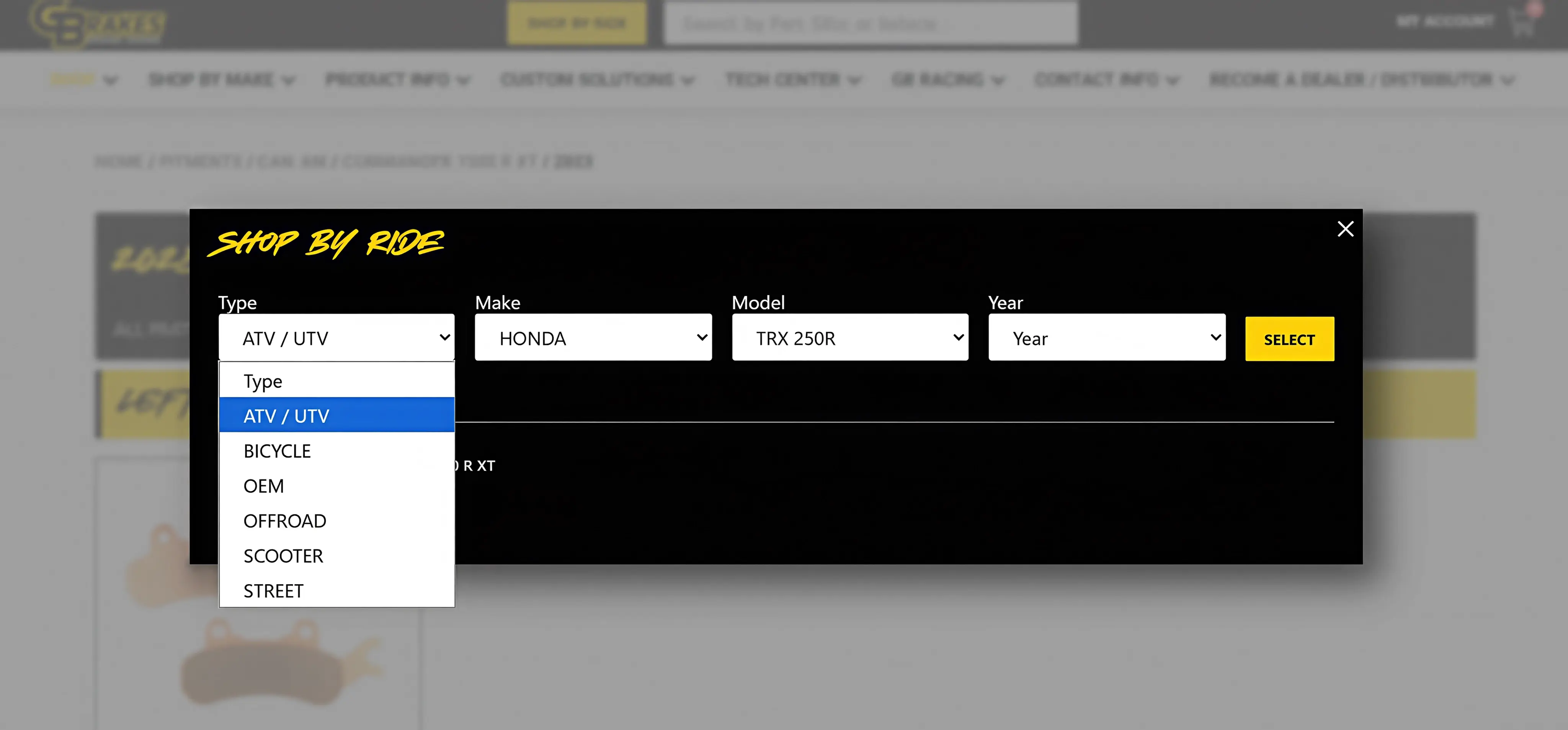
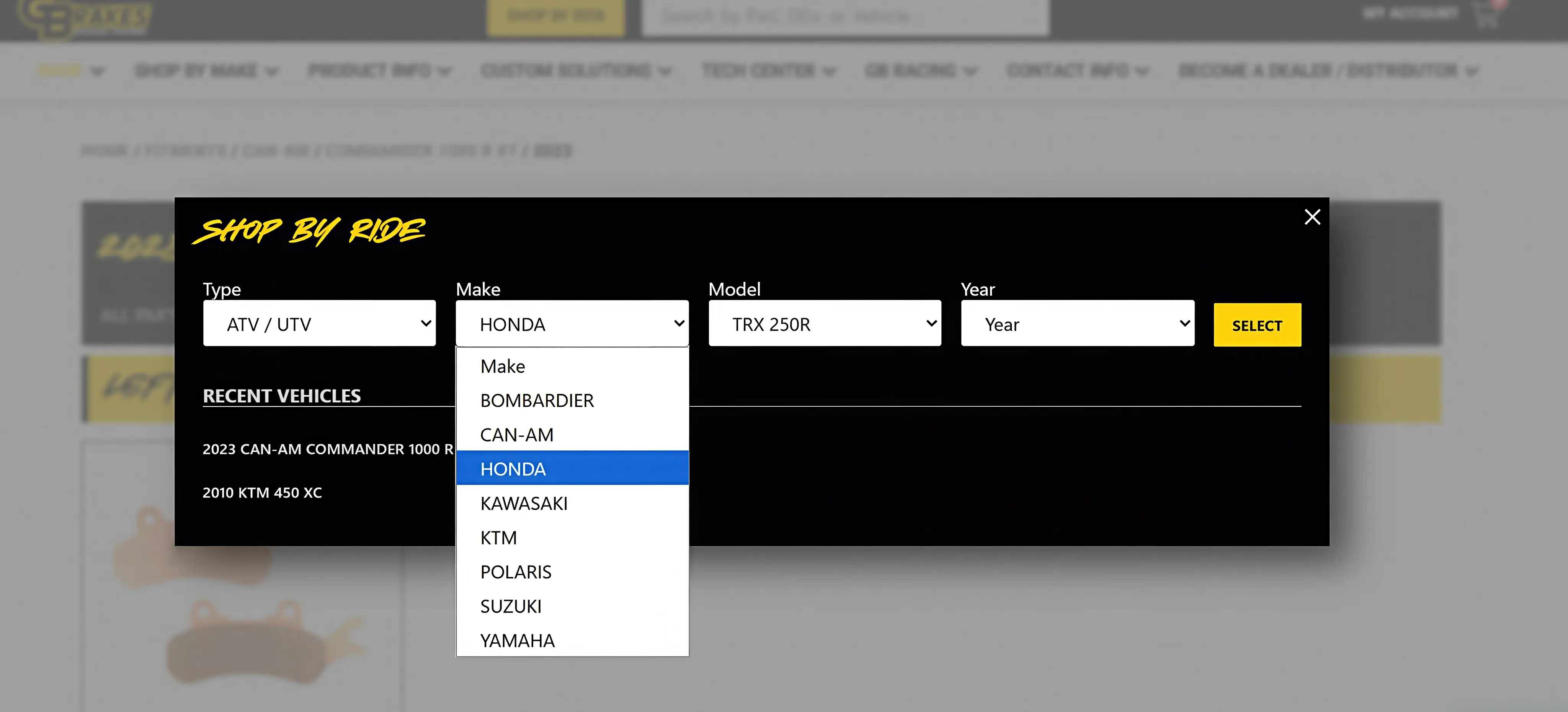
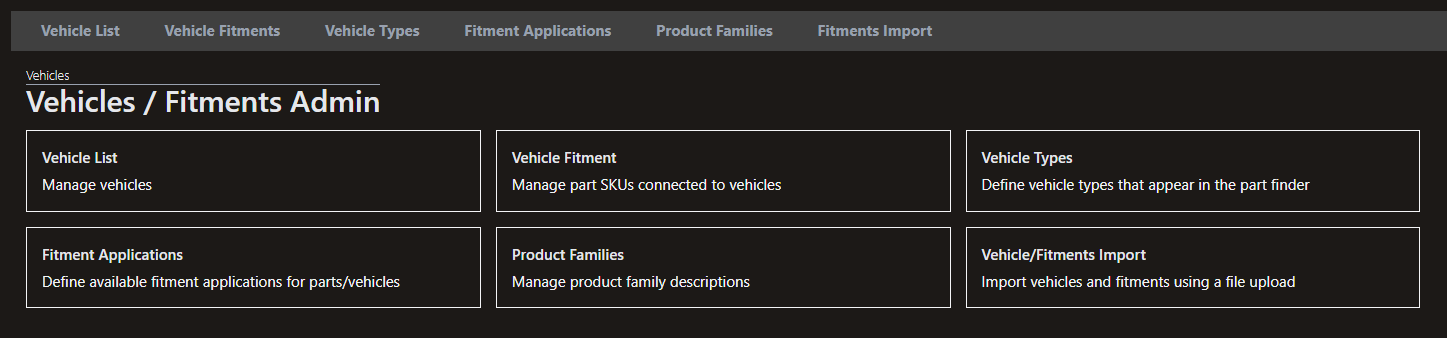
They had to have a fitment tool. Let’s say you pick your motorcycle’s make, model, and year—like a 2018 Honda® CBR600. The system then checks a massive database to find every part that fits that exact bike. Period. With up to 50 manufacturers, hundreds of models, and tens of thousands of matchable parts, the fitment system had to work quickly and present the right options the moment a customer landed on the page. It has to be fast, accurate, and efficient. You finally got a customer to your website. You can’t frustrate them with bad tech.
PROBLEM 1
Customers don't wait. If the system is slow, confusing, or crashes, they're gone. You've lost half hard-earned potential customer traffic - and not just traffic. You finally got them in front of a product purchase area, and it didn't work right.
The old GBrakes site was painfully slow. The fitment system crashed constantly. Pages took 8-12 seconds, if not more, to load. Some of them never even loaded. It would often crash during checkout.
Sound familiar? That's the point. We see this in many small to mid-sized companies in the same position - needing a powerful fitment tool or some other customized web application to sell their product better. But instead, they force customers to go through endless tables and pages to find what they want. Customers are impatient. They want immediate gratification. If you can't deliver it instantly, someone else will.
PROBLEM 2
| Position | Click-Through Rate |
|---|---|
| Position 1 | 27.6% - 39.8% |
| Position 2 | 18.7% |
| Position 3 | 10.2% |
| Total Top 3 | 54.4% - 68.7% |
Over 96% of all clicks stay on page one, making a top-three position critical. What we accomplished in such a short time was really amazing-even to us. We got them to the top of the search engines, number one position for many of our targeted terms, so quickly, because we took our time to cross our T's on everything from the content to the meta to the performance of the site. All of these things are key to getting indexed well by Google.
The difference between real optimization and so-called “optimization” is that true optimization is a keyword safari. You have to hunt down many different targets. You can't always go after the main term-sometimes you have to go after other terms and build content that Google sees as a high-quality answer to the question.
Every little grouping of a keyword can have multiple sub-groupings, cluster terms, semantic variations, and long-tail nuggets. You have to cross-reference your list ten times, not just pull a simple keyword list and call it discovery. That's why so many people fail. It's ever-changing, and you have to really open your eyes and look at all the possible paths to your buyer. We needed to map those people from those search terms to us-and that's exactly what we did.
PROBLEM 3
Getting customers to the site is one thing. Keeping them there is another. If they can't quickly find the exact part that fits their bike, they leave - because they're in search of that part, and if you can't deliver it, someone else will. Wrong fitment data means returns, frustrated customers, and lost trust. And they probably won't return, because they don't think your system works.
The old website and system had no reliable fitment matching. If customers were finally able to get the site to load, they couldn't get the system to spit out the right part. It was complete chaos. We rebuilt everything so our database could instantly put the buyer in front of the part they wanted to buy.
There are fish in the ocean. But that doesn't mean you can just grab any boat, hit the water, and expect a perfect catch. You need a fish finder. Most companies fail because they rely on only 2-3 traffic sources when there could be thousands of buyer streams available. Proper keyword discovery and SEO helps you map this problem-but it's not just keyword discovery, it's a keyword safari. You have to go on a real hunt.
People search for bike parts in a million different ways: slang, broken language, brand names, year-make-model combinations. Every one of those variations is a potential buyer stream. You have to find all the different ways real people search, build focused content mapped to each important term, and keep updating because the market keeps changing. You can't take a small pass at it. You have to cross-reference your targets ten times, look at all the cluster terms and semantic variations, and map every possible path to your buyer.
Most brands throw out three lines with the same bait. We throw out hundreds of lines with different bait to catch buyers from every stream of search.
The plan: Show up everywhere buyers search.
Our Observation: The old site looked outdated and amateur. Product photography wasn't highlighted. Navigation was confusing. The system didn't load. The mobile experience was miserable.
Our Plan: Flush the toilet. It was time for a whole new approach. None of this crap can be reused. We got to work mapping all the contents of the pages and designed modern templates that showcase products perfectly - making it quick and easy to place an order. Customers only wait about two seconds before they click away. If they can't get somewhere fast, they're gone.
The multimedia is the frosting on the cake. The cake's already good if they'll just take a bite - but like any good cake, you've got to put "Happy Birthday" on it. That's your compelling visuals, videos, and short, engaging content built for today's short-attention-span visitor. Design and multimedia work hand-in-hand: stay visually interesting, keep it relevant, and present products in a way that complements the story.
What Amazon Gets Right: Think about it - why does Amazon get so many orders? Amazon looks plain, but it's brilliant in function. You type something in, and it instantly shows a page that matches those words. Every product page is a landing page - direct, image-driven, and built for conversion. You see the product, know it's available, and stay to buy.
What We Did and What We Do: We created that same experience. Whatever they're looking for, the site should feel like: “Here it is. Here it is. Here it is.” Keep them engaged just long enough to get what they want - so we get what we want. A sale.
Our Observation: Product updates were a mess. There was always adding new parts, mapping new parts to new bikes - and because they were doing it through a spreadsheet with humans manually interacting with cells, it was always a problem. The old system was hard-coded junk, not dynamic, and completely unusable.
Why Rebuilding Had to Happen: The technology that had to be introduced - because they needed to survive - had to be idiot-proof. As the old saying goes, as soon as you make something idiot-proof, they make a better idiot. So we went back to the drawing board and built everything from scratch. We took their raw data, turned it into a real database, built a proper fitment center, a working website, and a full ordering system. People were already searching for bike parts. We just had to put GBrakes in front of them and give them a fast and simple way to buy. Now, when a buyer finds their website, they actually get orders.
Click each to see how we built it.
Riders know their bike-they don't know part numbers.
We built a system where you type something like "2018 Honda® CBR1000RR", and it instantly shows every compatible part. Thousands of SEO-optimized pages were generated to cover all year/make/model combinations.
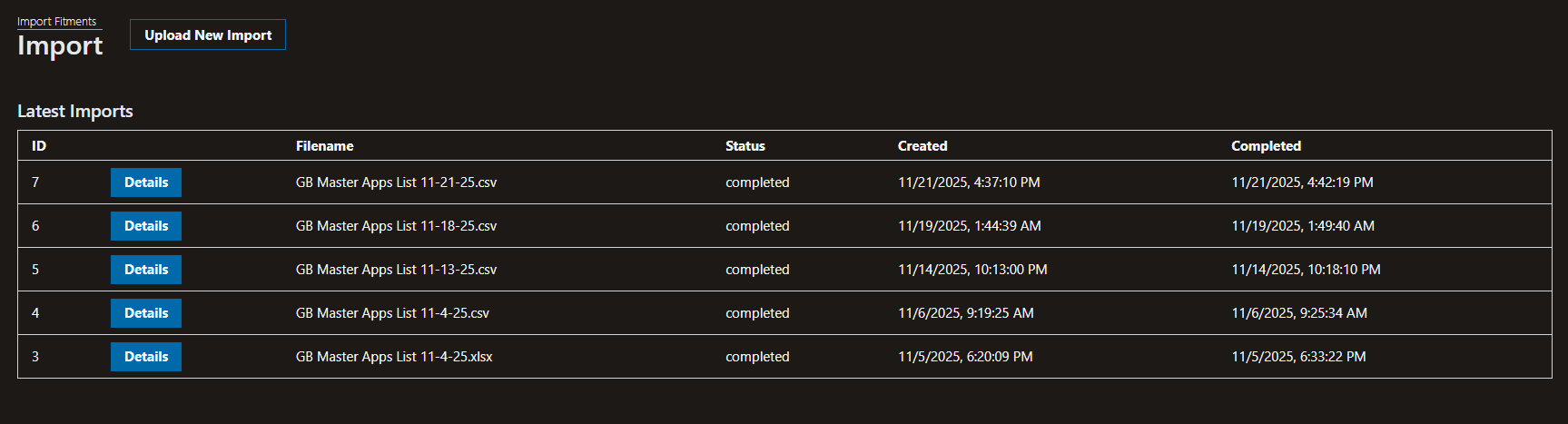
Thousands of SKUs scattered across spreadsheets. Every price change meant hours of manual work.
We built a custom importer where you drop in a spreadsheet (CSV file), and the system updates thousands of products in seconds. It checks for errors before anything goes live, so updates stay clean and accurate.
Customers want fast checkout. Dealers need invoicing and purchase orders. We built a system that can handle all of it-securely and without delays.
Visa, Mastercard, Amex
One-tap mobile checkout
Easy account-based payments
Buy now, pay later
For businesses
Dealer payment terms
"You wouldn't go into a corner without looking, would you? They build content, forgetting keywords. They don't do proper discovery."
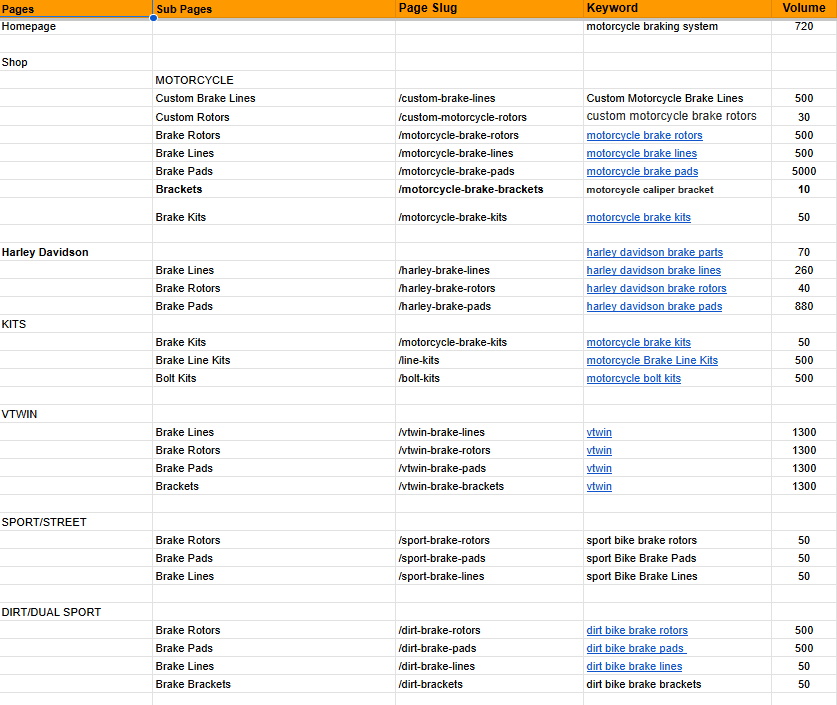
Hundreds of thousands of people search for bike parts every day. They only know their year, make, and model. We went on a full keyword safari-hunting down every possible way a real buyer might search. We looked at all the terms people actually use, what competitors ranked for, and mapped out the technologies needed to make it work fast.
What we found: Harley Davidson Brake Rotors. Motorcycle brake rotors. Motorcycle brake pads. Street bike brake pads. High-intent buyer terms-and hundreds of variations around each one.
What we did: Categories reorganized. Product titles rewritten. Full descriptions added. Fitment fields structured. Internal linking cleaned. Every page built to match the exact term a buyer searched for.
There are plenty of platforms: Shopify, WordPress, BigCommerce, and more. We work on every platform and try to match the platform up with the application that's best for the customer's needs.
In this case, after evaluating all options, WordPress® + WooCommerce® was the smart choice. It handled their complex product database, fit their limited budget, gave them full control, and could run on its own server so they could be completely independent.
We also built the system to support multiple storefronts, using the same inventory and the same web application to power different websites, giving them a dual presence. You can see this in action on their second site, BrakeLiquidators.com, which is the exact same application running under a different name. This allows them to have two different storefronts competing in the same market.


No vendor lock-in. Full control. 5,000+ applications.
Build a system that's fast, flexible, and easy to manage-so the team can run it without needing a developer every time something changes.
We focused on cleaner data, fewer manual steps, and tools the team can operate on their own. The result is a platform that updates quickly, keeps product info accurate, and gets in front of all the buyers. It had to be idiot-proof, because the goal was independence: a system they own, control, and can grow without outside help.
GBrakes doesn't just sell to riders. They sell to dealers and resellers across the industry.
We built a dedicated B2B platform alongside the retail storefront - with tiered pricing, bulk ordering, and real-time inventory - all designed to scale B2B and B2C without adding complexity.
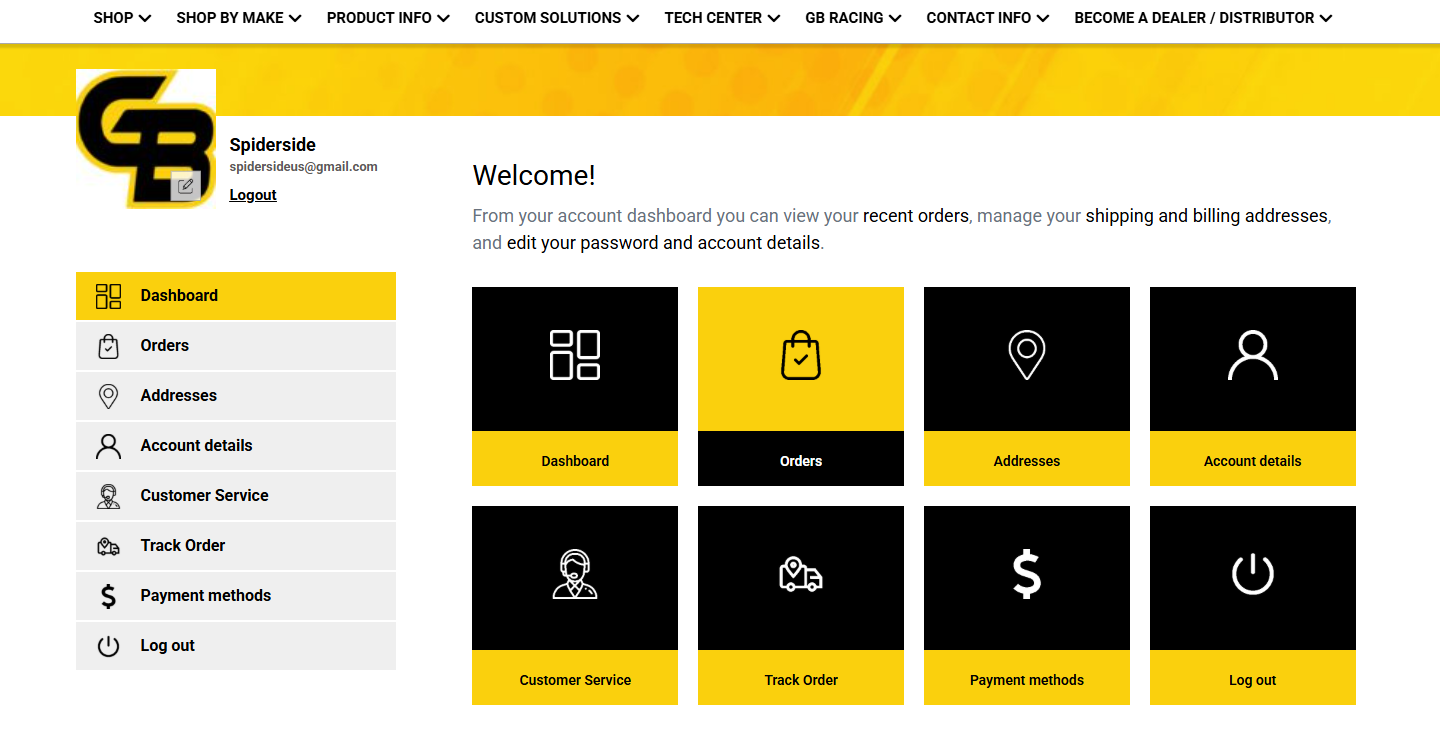
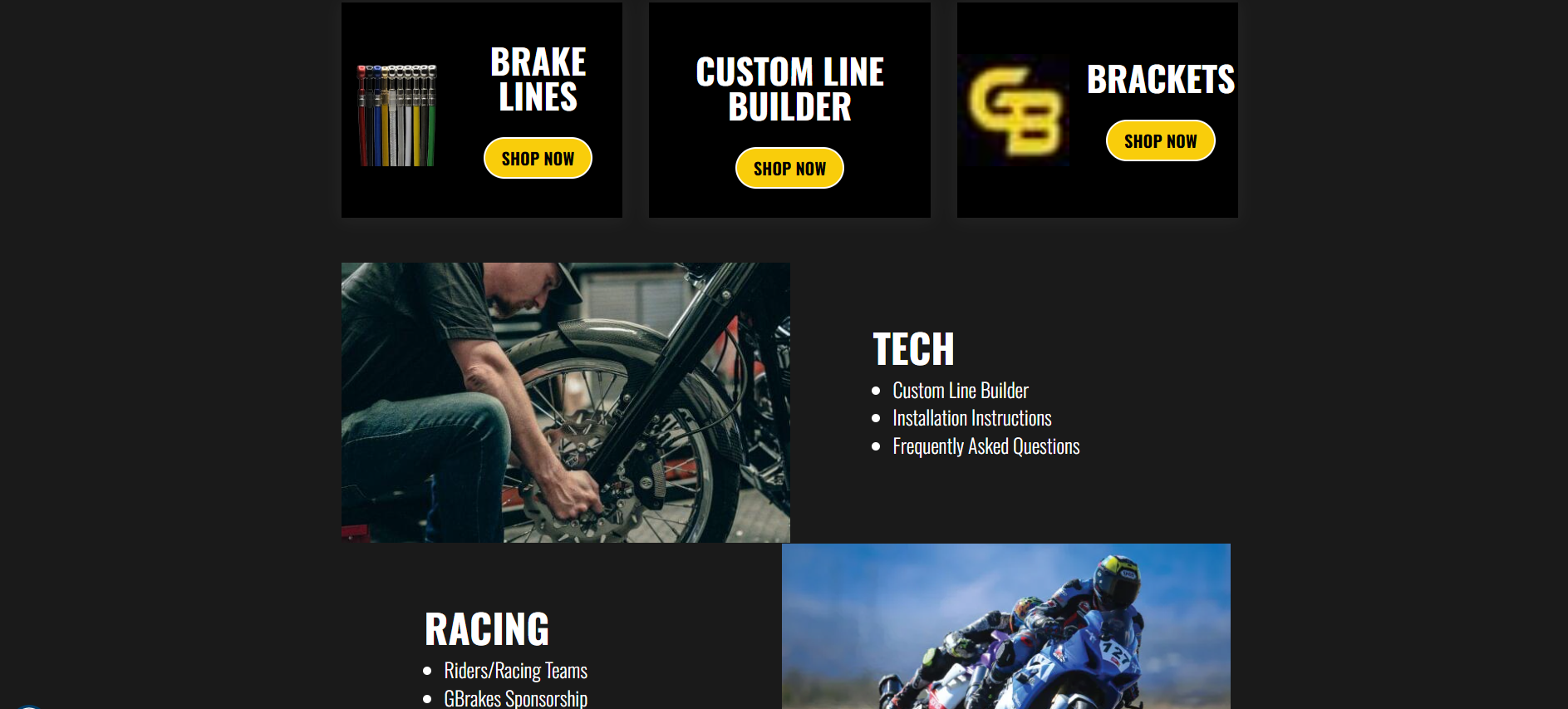
Painfully slow - customers left before pages loaded
Outdated interface - looked amateur
Poor mobile - impossible to shop on phones
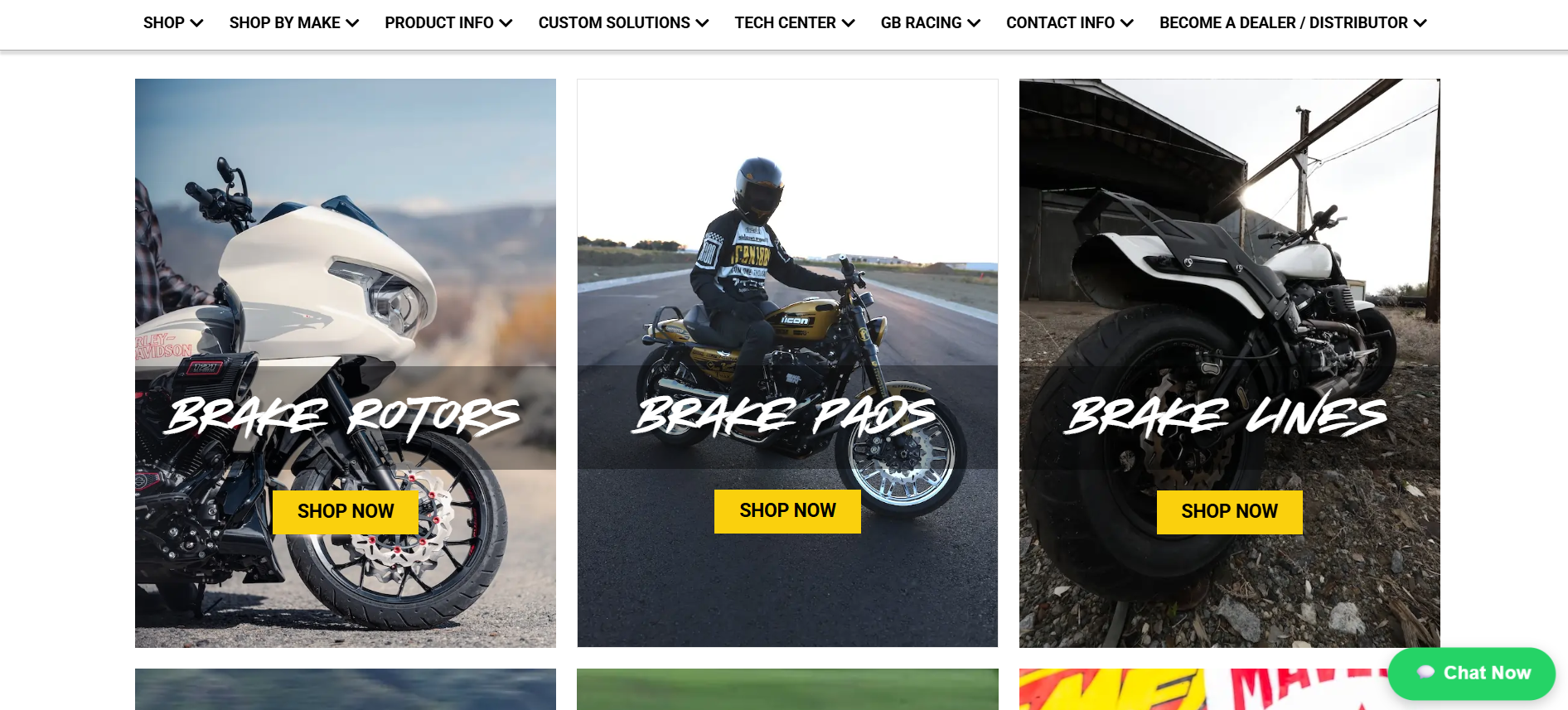
Fast modern design - loads instantly
Professional interface - builds trust
Mobile-optimized - perfect on phones
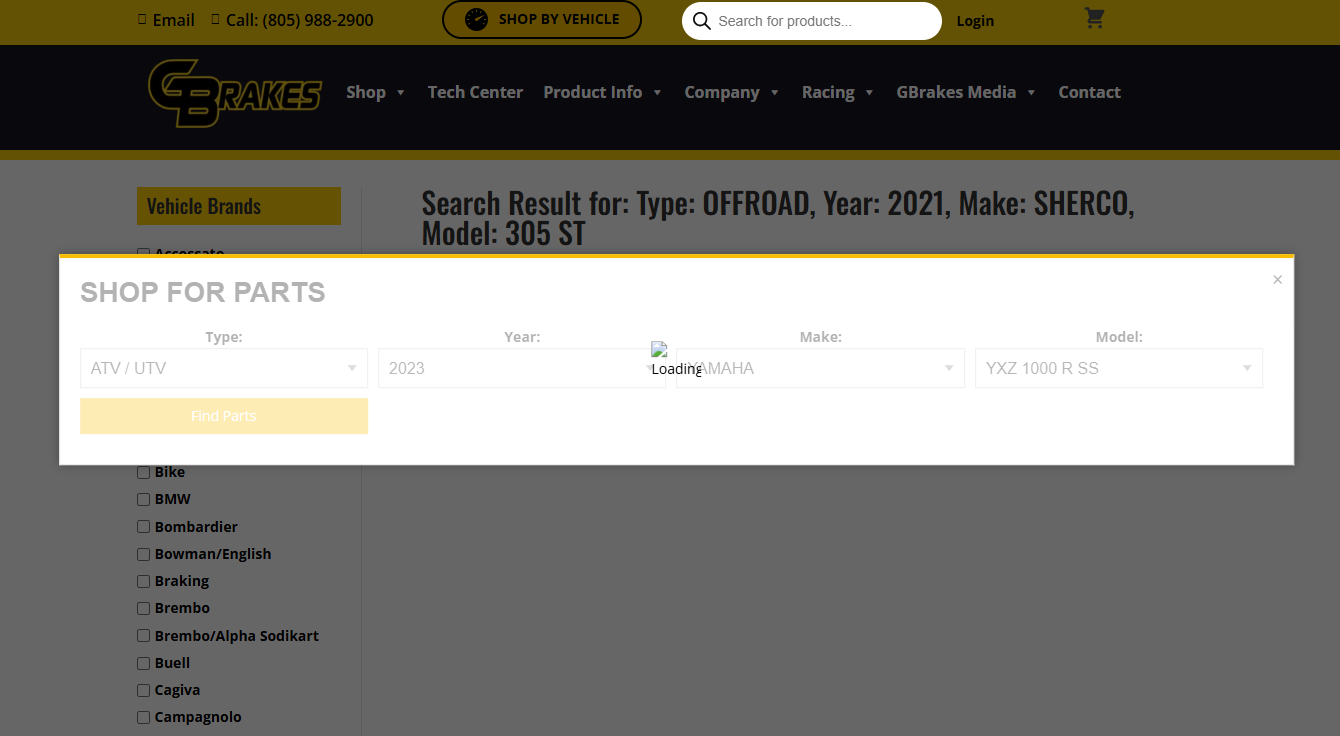
Waited 10–12 seconds… then crashed - the fitment tool timed out and showed no results
No search by bike - customers couldn't find parts for their make and model
Returns skyrocketed - wrong parts ordered constantly
Support overwhelmed - every call was "will this fit?"
Exact fitment - every part knows what it fits
Search by bike - instant compatibility
Returns dropped - correct parts first time
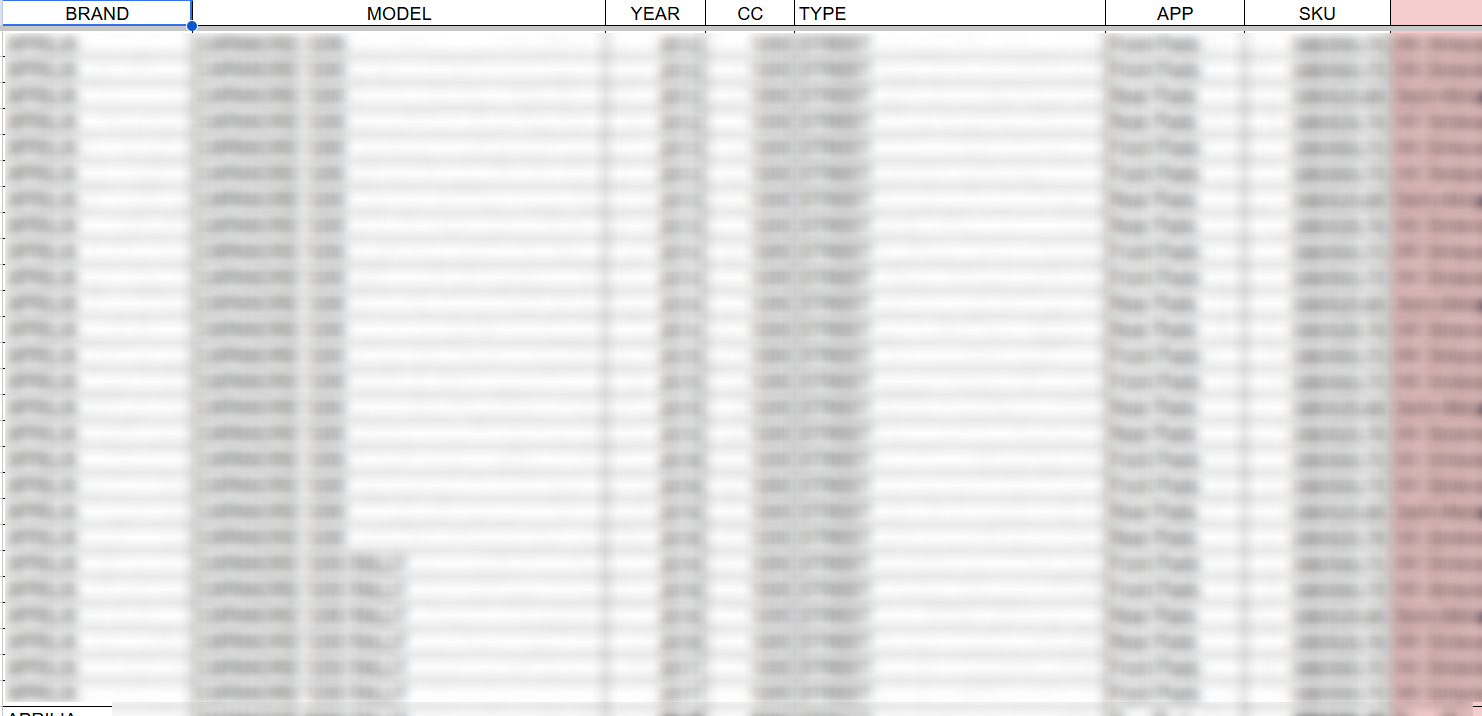
Their product data lived in a massive spreadsheet with countless fields and rows. Everyone used different terms, updates were manual and error-prone, and every change risked breaking the entire system.
Only developers could update - team powerless
Dealers didn't match website - zero correlation
Old clunky data - No way to import easily to the site
Updates took hours - manual work
Now their product data lives in one connected admin. Teams update inventory, pricing, and fitment in real time — no developers needed, everything stays in sync, and bad data gets caught before it goes live.
Teams update themselves - no developers
Always matches - complete correlation
Validation built-in - no bad data
Within a few months, they reached their retail sales goal. GBrakes climbed to top rankings for multiple targeted SEO terms and started generating revenue right away.
This is being rolled out at a time when Google isn't the only place people go for answers anymore. The market is shifting fast: users aren't relying solely on Google search, and a growing share now goes straight to AI tools like ChatGPT and other assistants to look things up instead of running a traditional search. We made sure they were being found everywhere.
This all ties back to the three core objectives: get people to the site, keep them engaged on the site, and get them to order from the site.
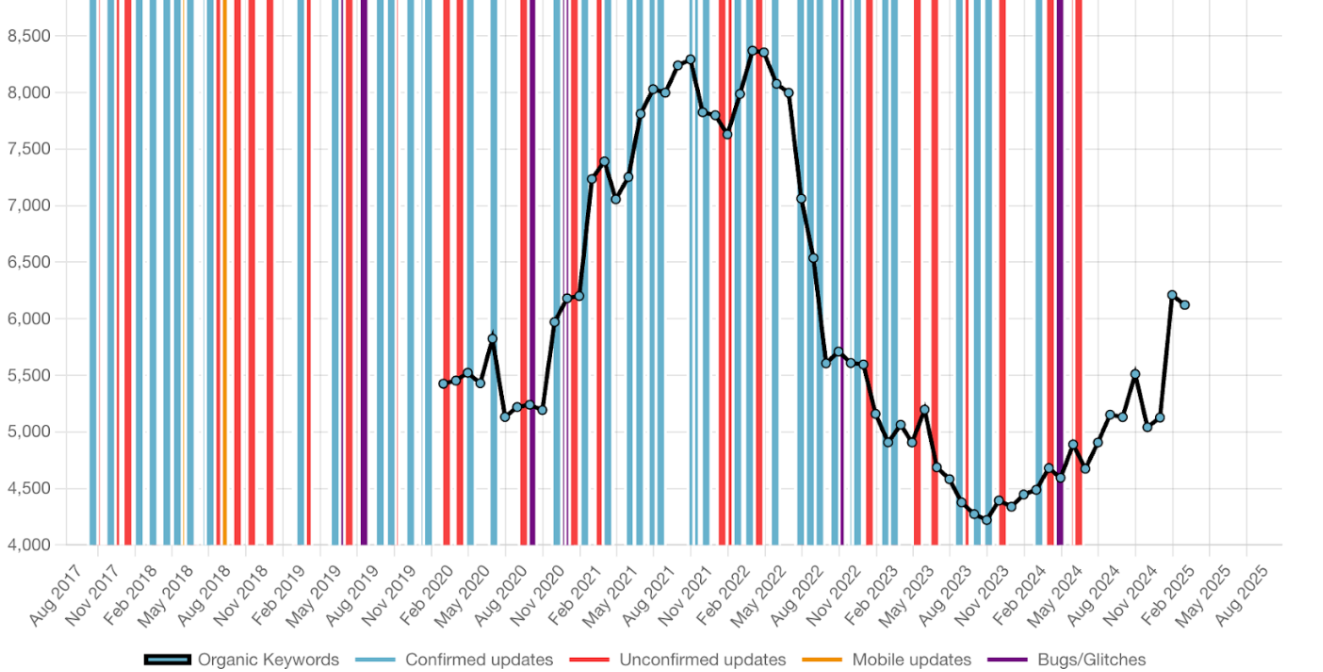
Traffic collapsed - site went from visible to invisible
Zero search presence - not ranking for any targeted terms
No organic visitors - years of investment with no results
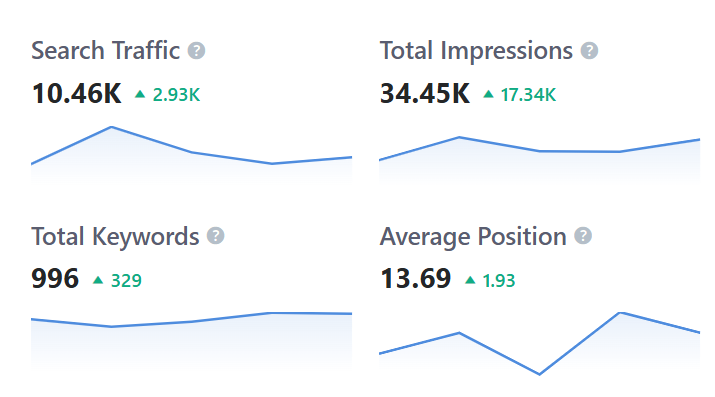
Top rankings achieved - multiple targeted SEO terms on page one
Organic traffic flowing - qualified visitors arriving immediately after launch
Found everywhere - Google, AI tools, and all major search channels
Zero orders - hadn't had an order in three months
Checkout didn't work - customers couldn't complete purchases
Revenue flatlined - two years of investment with no sales
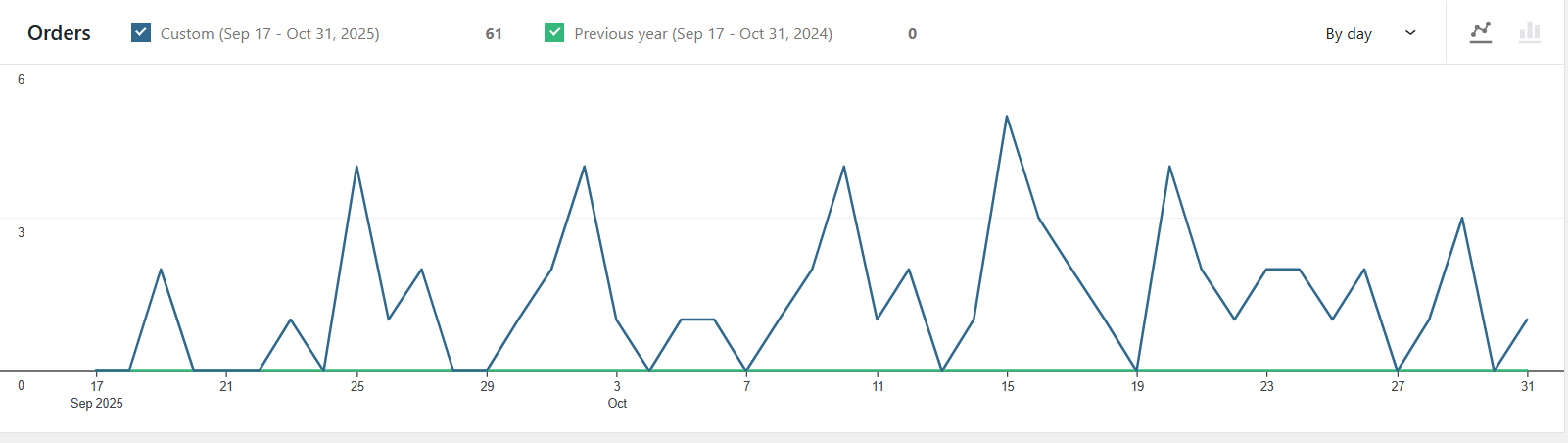
First orders within days - revenue started flowing immediately after launch
Retail sales goal hit - reached target within a few months
Full funnel working - traffic, engagement, and orders all increased together
Many companies like GBrakes spend years and thousands of dollars with an agency that isn't going to get the job done on time. In any kind of construction that you would do in your world, you know exactly when it's supposed to be done and how much it's supposed to cost. Why does your website not work like that?
At The Final Code, we take our time to measure what is wrong and how to get there, so you know how much you're going to pay and how long it's going to take. And that's why our results speak for themselves.
Hear from some of our other clients. As one of them said:
“They saved my bacon.”
A Final Code Client
If you have the same problem, reach out to us.
CONTACT USDon’t lean into a broken system.
