SEO and PPC Working Together: One Keyword List Wins
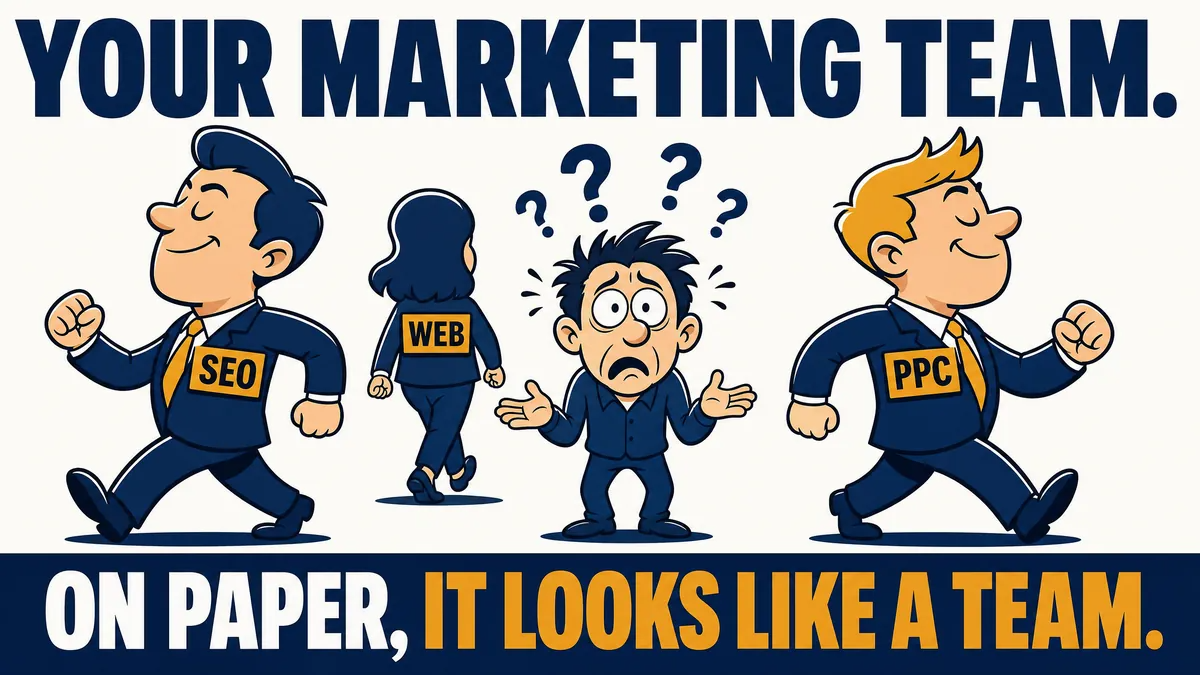
You hired help. Good help, even. A web person. An SEO person. A Google Ads person (PPC, if you like the acronym). On paper that looks like a team. Online it can look like three folks who have never once been in the same room. Getting your SEO and PPC working together would fix half of it. Most businesses never do.
Here is the part nobody warns you about. Your ad calls you a Ventura attorney. Your SEO calls you an Oxnard lawyer. Your website is off doing its own thing, talking about "legal solutions" or whatever phrase sounded smart that month. Same business. Three different names for it. And the customer just picks the company that sounds sure of itself.
That is the whole problem in one sentence. It is not talent. It is not budget. It is agreement.
Why don't my SEO and PPC use the same keywords?
Most marketing fights are really one fight wearing different hats. Everybody is working from a different list of words.
- The SEO person picks keywords they think they can rank for over time.
- The ads person picks keywords that pull clicks today.
- The web person, honestly, is usually just trying to make the thing load fast and look good (bless them, it is a real job).
Nobody sits down and checks if these three lists match. They almost never do. So you end up bleeding money three ways:
- You pay for paid search on words your own website does not even use.
- You rank organically for words your ads completely ignore.
- You chase the same customer twice and confuse them on the trip.
SEO and PPC are not rivals. They are good at different things.
These two are not enemies. They cover for each other's weak spots, which is the whole reason they belong on one team.
- SEO is the slow cooker. It takes months to build. But once you rank, the clicks keep coming and you are not paying for each one. It carries trust too. People know the top organic spot was earned, not bought. The downside is simple. It is slow, and you do not control the timeline.
- PPC is the microwave. You turn it on and traffic shows up the same afternoon. You can target one zip code, one kind of phone, even one time of day. It is also the fastest way to learn which words people actually buy from, not just click. The downside is just as simple. The second you stop paying, it all goes dark.
See the trade? One is slow but lasting. One is instant but rented. Run them apart and you only ever get half.
How SEO and PPC actually work together
This is the stuff your separate vendors never do, because they never talk. It starts with one shared keyword list. The real words your customers type when they are ready to call. Everybody builds from that one list. Then:
- Ads tell SEO where to aim. PPC shows you in a couple of weeks which keywords actually turn into calls and quote requests. Hand those proven winners to your SEO team so they build pages around words you already know convert, instead of guessing for six months.
- SEO tells ads where to stop. Once you rank number one for a term organically, you can pull back paid spend on it. Why pay for a click you are about to get free? Move that budget to words you do not rank for yet.
- You follow up with people who already met you. Someone reads your blog from a normal search and leaves. With the two sides connected, a quiet little ad keeps your name in front of them for a week. That is remarketing, and it only works when both sides share data.
- Good SEO makes your ads cheaper. Google charges you less per click when the page behind the ad is fast, relevant, and matches the search. The same work that helps you rank organically lowers your ad cost. Two birds.
- The message never breaks. Same words in the ad, the click, and the page they land on. The visitor never has that half-second of doubt where they wonder if they clicked the wrong thing. Steady message, more calls.
None of that happens by accident. Somebody has to make the two channels share a brain.
The "near me" mess is bigger than people think
Local search is a strange animal. Somebody in Oxnard types "lawyer near me." Somebody two miles up the road types "Ventura attorney." Could be the same person, on two different days, depending on their mood and where they parked.
If your ads, your local presence, and your site all point at slightly different versions of your own town, Google gets unsure about where you belong. An unsure Google quietly slides you down the page. And page two, let's be real, is where good businesses go to nap.
This is why your search strategy, your map listing, and your paid ads all have to name the same places, the same way, every single time.
Do your SEO and PPC need to be one company, or just one plan?
You do not need one company. You need one plan. (There is a difference, and anybody who swears otherwise is probably selling you the company.) Maybe your web work is handled in house. Maybe your SEO is a contractor you actually like. Maybe your logo came from a friend's nephew who turned out to be pretty talented. Fine. Keep them all. Just make them build from the same keyword list and describe what you do the same way. That is the whole SEO and PPC strategy in one move: same words, shared data, one direction.
What SEO and PPC working together actually looks like
Short version, no fluff. It comes down to three things:
- Same core keywords everywhere. Homepage, service pages, ads, Google profile. One vocabulary across the board, not four.
- A message that holds steady. From the ad, to the click, to the page they land on. No bait and switch.
- One human owns the master list. Just one. They update it when your business changes, when you add a service, when you decide what you actually want to be known for.
Questions people actually ask
- What is the difference between SEO and PPC? SEO earns your spot in the regular search results over time, and you do not pay per click. PPC buys your spot in the ad slots, and you pay every time someone clicks. One is owned attention. One is rented.
- Is PPC better than SEO, or the other way around? Neither, and that is the point. PPC wins on speed and testing. SEO wins on cost and trust over the long haul. The businesses that pull ahead use both, pointed at the same words.
- Should the same company run both? Not required. One coordinated plan is required. If two vendors will truly share a keyword list and their data, great. If they will not, you are better off under one roof.
- How fast does this pay off? The PPC side can bring calls within days. The SEO side usually takes a few months to really move. Together you get something now and something that keeps growing.
If your marketing feels busy but quiet
That gap, busy but quiet, is usually the keyword problem hiding in plain sight. Lots of motion. Not a lot of phone ringing.
We have been doing this for more than twenty years, for Fortune 500 names and for mom and pop shops on the same block. We know this industry. We get the web, the SEO, and the ads pulling one direction instead of three. Want a second set of eyes on yours? Reach out through our contact form and we will take a real look. Or just call or text 805-243-8321. A real person picks up. Imagine that.